Sunday, October 27, 2019

Absorb The Beauty of Western Ghats at Kathirumudi Near Thiruvananthapuram


There is something special about trekking through the mountains. Away from the noise of everyday life, surrounded by forests, rocks, streams and clouds, the body gets tired but the mind feels refreshed. I believe that healing the body and mind is essential to enjoying life to its fullest—especially while travelling.

With this thought, I reached Thiruvananthapuram on Saturday night and checked into my hotel, preparing for the next morning's adventure: a trek to Kathirumudi, situated in the Agasthya mountain ranges of Thiruvananthapuram district, Kerala.

An Early Morning Start

The next morning, five of us gathered at Thampanoor. At around 6:30 AM, as the sun was beginning to rise, we started our journey towards Kappukad by car.

Since it was Diwali, most shops and hotels were closed. We managed to find a place for breakfast and had a quick pit stop before continuing our journey.

Our reporting time at the Kappukad Elephant Rehabilitation Centre was 8:00 AM. Kappukad is the base for the trek and is about 2 km from Kottur, which is approximately 30 km from Thiruvananthapuram.

For those travelling by public transport, buses are available from the Thampanoor KSRTC Bus Stand to Kottur. From Kottur, Kappukad is only a short distance away.

We reached Kappukad at around 8:30 AM. Those who arrived early had some time to walk around the Elephant Rehabilitation Centre. By about 9:00 AM, the remaining members of our group had arrived.

After completing the formal registration, we moved towards the actual starting point of the trek, which was about 5 km from Kappukad.

A Taste of the Forest

On the way, we stopped at a spot where underground water was being collected and flowing through a small pipe. It was one of those unexpected little moments that make a trek memorable.

Most of us emptied whatever water was left in our bottles and filled them with the fresh water flowing from the pipe. The water felt incredibly refreshing, and there was something satisfying about collecting drinking water directly from the forest.

We left our luggage in the car and carried only our lunch packets and water bottles in small bags.

After a brief introduction, we began our trek accompanied by two guides.

Into the Shola Forest

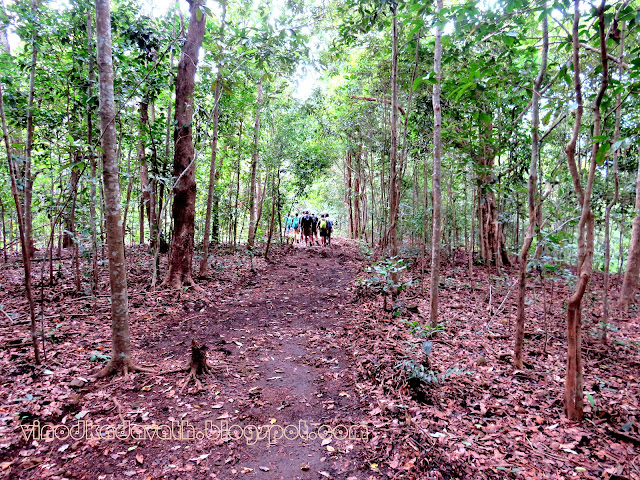
Kathirumudi is a moderately challenging hike, with a gradual ascent through thick shola forests, rocky formations, narrow trails and open grasslands.

The trail constantly changed character. At one moment we were walking beneath the shade of dense forest, and a little later the vegetation opened up to reveal expansive grasslands and mountain views.

The forest was alive with small creatures. We came across plenty of tiny insects along the trail, adding to the feeling that we were walking through a living ecosystem rather than simply following a trekking path.

Kathirumudi lies to the south of the Agastyakoodam hill range in the Western Ghats. The Agasthya Mountains are known for their rich biodiversity and are home to numerous indigenous species.

As we climbed higher, the forest gradually gave way to more open terrain.


The First Grand View of Agasthyamalai

After trekking for some time, we reached a vast open area fenced with rails.

And then came one of the most memorable moments of the trek.

On our left stood the magnificent Agasthyakoodam mountain.

The sight of the massive mountain rising in the distance was breathtaking. After walking through the forest for so long, suddenly being presented with such an expansive view felt like a reward for every step we had taken.

We paused for a while, took photographs and admired the landscape before continuing towards the summit.

Reaching the Summit of Kathirumudi

Finally, we reached the summit of Kathirumudi.

The summit itself is a rocky formation, but the real attraction is the panorama from the top.

From here, we could see the majestic Agasthya hills, Neyyar Lake and Peppara Lake. The combination of mountains, forests and water created a spectacular landscape. This viewpoint offered a unique opportunity to see all three of these beautiful places from one location.


In the distance, we could also see Agastya Hill and Pandava Hill.

The entire mountain range stretched before us, with rolling hills disappearing into the clouds. From afar, the mountains appeared bluish, creating a dreamlike landscape.

It was the kind of view that makes you forget the effort of the climb.


Lichens, Mosses and Ferns

A small section of the rocky summit was covered with lichens, mosses and ferns.

These tiny plants added another layer of beauty to the otherwise rugged rock surface. The combination of ancient-looking rocks, delicate vegetation and mist-covered mountains made the summit feel wonderfully untouched.

We spent some time enjoying the views before beginning the next part of our journey.

Across Four Peaks

Our trek did not end at the summit.

We continued further, crossing four smaller peaks, each involving its own share of ascents and descents. The trail eventually led us towards a small stream.

By then, we were ready for lunch.

We sat beside the stream and opened our packed lunch. The sound of flowing water, the surrounding greenery and the quietness of the forest made it a perfect place to rest.

There had once been a water tank in the area, but it had reportedly been destroyed by elephants.

After lunch, we rested for a while, took some photographs and prepared ourselves for the descent.

A Tough Descent

If the climb had tested our legs, the descent tested them even more.

The downhill trail was difficult in places, and we had to stop every now and then to rest. By this stage, our legs were already tired from crossing the peaks, and the continuous descent demanded considerable effort.

Eventually, at around 3:00 PM, we reached the starting point of the trek.

Our total trekking distance was approximately 10 km.

We were tired, but there was still one more item on our itinerary.

A waterfall awaited us.

Refreshing Bath Under the Waterfall

After parking the car, we walked barefoot for about a kilometre towards the waterfall.

It wasn't a huge waterfall. Instead, several small streams of water flowed gently over the rocks. The setting was peaceful and serene.

We sat on the rocks near the point where the water descended and relaxed for a while.

After hours of trekking, the cold water felt wonderful.

A bath beneath the falls washed away much of the fatigue from the day's hike. Sitting there surrounded by rocks, flowing water and greenery, I felt completely relaxed.

Sometimes, the simplest experiences become the most memorable ones.

Tea, Reflections and the Journey Back

After the refreshing bath, we began our return journey.

We stopped at Kottur for tea and spent some time discussing and reviewing the trek.

Looking back at the day, Kathirumudi had offered almost everything a mountain trekker could ask for—dense shola forests, rocky formations, narrow trails, open grasslands, streams, distant mountain views and a refreshing waterfall at the end.

It was challenging, especially during the descent, but the scenery and experience made the effort worthwhile.

Sunday, October 20, 2019

Water Lily Bloom at Malarikkal


Kerala has always been blessed with breathtaking landscapes, abundant natural resources, and a remarkable variety of flora and fauna. But every year, nature has a way of surprising us with something new. In recent years, the blooming of water lilies across parts of Kottayam district has become one such seasonal spectacle.

Among the many places where this magical transformation can be witnessed, Malarikkal, which is situated adjacent to the Thiruvarpu Road at Illikkal Town, near Kottayam, has emerged as one of the most popular destinations for nature lovers and photography enthusiasts.

From the spectacular Kaas Plateau in Maharashtra to the enchanting Neelakurinji blooms of Munnar, seasonal flowers have always tempted me to travel. There is something special about witnessing nature at its most fleeting—knowing that the spectacle will disappear in just a few weeks.

This time, it was the turn of Malarikkal.

An Early Morning Journey from Kochi

My wife and I set out from Kochi at around 5 a.m., eager to catch the flowers at their best. An early start is important because water lilies bloom during the night and gradually wither as the day progresses. If you want to experience the flowers in their full glory, it is advisable to reach Malarikkal before 11 a.m.

As we approached the destination, the excitement grew. We parked our car some distance away from the actual viewing area and continued on foot, crossing a bridge and walking towards the vast paddy fields.

And then, suddenly, the landscape opened up before us.

A Paddy Field Turned Pink

What we saw was almost surreal.

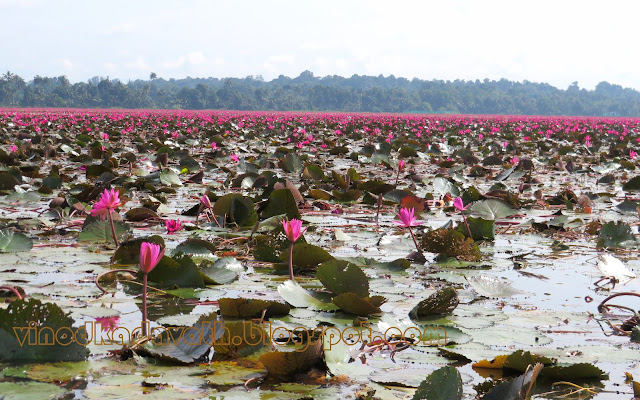
The vast expanse of paddy fields appeared to be covered with an unearthly pink carpet of water lilies. Thousands of flowers floated across the water, creating a scene that looked more like a painting than a real landscape.

People had arrived from different places, cameras and mobile phones in hand, eager to capture the fleeting beauty. Families posed for photographs, friends wandered through the fields, and photographers searched for the perfect frame.

The flowers, locally known as ambal, transformed the otherwise familiar paddy fields into a spectacular natural garden.


Walking Among the Water Lilies

After walking some distance along the fields, we decided to experience the flowers from a different perspective.

We took a boat ride through the water lilies, gliding slowly between the clusters of pink blossoms. The boat ride cost ₹100 per person.

From the boat, the experience was even more beautiful. Surrounded by flowers on all sides, we could appreciate the sheer scale of the bloom. The gentle movement of the boat, the morning light, and the pink flowers stretching into the distance created a wonderfully peaceful atmosphere.

It was one of those moments when there was little need to say anything. Nature itself provided the entertainment.

A Seasonal Spectacle

The water lilies spread across an extensive area of paddy fields—reported to cover around 900 acres during the blooming season.

Interestingly, these fields are not permanent flower gardens. The water lilies flourish during the period when the paddy fields are not being cultivated. As the water level begins to recede and the time for agricultural activities approaches, farmers prepare the fields for cultivation and remove the flowers, including through the use of pesticides.

This makes the bloom a particularly fleeting experience. The same fields that become a spectacular sea of pink during one season will eventually return to their agricultural purpose.

Why Malarikkal Is Worth Visiting

For many Keralites, a trip to Malarikkal during the water-lily season has become a favourite seasonal outing. It is an opportunity to step away from the usual tourist attractions and experience a quieter, more natural side of Kerala.

There is no grand monument here, no elaborate attraction and no artificial spectacle. Instead, there are paddy fields, water, flowers, boats, and the simple beauty of rural Kerala.

And perhaps that is what makes Malarikkal so special.

A Few Things to Keep in Mind

If you are planning to visit Malarikkal during the water-lily season:

Start early: The flowers look their best in the morning and begin to wither as the day progresses.

Reach before 11 a.m.: Early morning offers better light and a more pleasant experience.

Carry a camera: The pink carpet of flowers provides countless opportunities for photography.

Try the boat ride: Seeing the flowers from the water offers a completely different perspective.

Check the blooming season: The flowering period is seasonal and can vary from year to year.

Respect the fields: These are working agricultural lands, so visitors should avoid damaging the plants or disturbing farming activities.

A Morning to Remember

A day trip to  Malarikal for “water lily bloom viewing” is a Favorite pastime for many Keralites during this season.  It’s time to refresh your eyes with the beautiful sight of blooming flowers.

Sunday, October 06, 2019

Chasing footprints of Adi Shankaracharya


There is something exciting about driving for an hour from Kochi to a place that has been waiting quietly on your travel list for nearly two decades.

Kalady, the birthplace of Adi Shankaracharya, is just about 42 kilometres from Kochi. Yet, like many places close to home, it remained unseen for us for the simple reason that we always thought, “We can go there anytime.” Nearby places somehow have a way of becoming tomorrow’s destinations.

Kalady was one such place on my list.

One fine Sunday morning, on the auspicious occasion of Maha Navami, my wife and I finally decided to make the journey.

The Story Behind the Name Kalady

Kalady literally means “feet” or “footprints.” The story associated with the name is as fascinating as the place itself.

According to legend, the Poorna, or Periyar, River once flowed some distance away from its present course. Young Shankara’s mother, Aryamba, would walk to the river for her daily rituals. One day, while making the journey, she fainted from exhaustion.

Young Shankara prayed to Lord Krishna, seeking help for his mother. It is believed that Krishna blessed him and moved the river closer to their home, following the path marked by the boy’s feet.

And thus, the place came to be known as Kalady.

Whether legend or history, such stories give a place a personality. As we drove into Kalady, I found myself thinking about the young boy whose life would eventually leave such a profound mark on Indian philosophy.

Remembering Adi Shankaracharya

I tried to recollect what I had read about Shankara's life in books.

Adi Shankara was born into a Namboothiri family to Shivaguru and Aryamba at Kalady. According to tradition, his parents prayed to Lord Shiva for a child. They were given a choice: a son who would live a long, ordinary life or a son who would become extraordinary but have a short life.

They chose the latter.

That child would grow up to become one of India's greatest philosophers and spiritual teachers.

Our first stop was the Adi Shankara Keerthi Stambha Mandapam.

Adi Shankara Keerthi Stambha Mandapam

The entrance to the memorial is guarded by two imposing elephant statues. Once inside, a circular ramp leads visitors upwards.

What makes the memorial particularly interesting is the way the story of Shankara's life unfolds as you ascend. Along the walls are sculpted and painted scenes depicting different episodes from his life.

The memorial is not merely a collection of statues. It feels like a visual narration of the life of a remarkable child who went on to become a great spiritual teacher.

Along the way, we also came across representations of Ganapati, Karthikeya, Surya, Vishnu, Shakti and Shiva.

The entry fee was just ₹5, collected as a donation—a surprisingly modest amount for a place that offers such an interesting glimpse into the life of Adi Shankaracharya.


Srikrishna Temple

Our next stop was the Srikrishna Temple, traditionally regarded as the ancestral deity of Adi Shankaracharya's family.

The temple has murals depicting episodes from Shankara's childhood. One shows the young Shankara worshipping Lord Krishna with his mother. Another depicts the famous episode involving a crocodile—an incident that would eventually become an important part of the story of his renunciation.

Standing before these murals, I found myself imagining the little boy behind the legend: a child growing up in Kalady, unaware of the extraordinary journey that lay ahead.

Adi Shankara Janam Bhumi Kshetra

We then entered the Adi Shankara Janam Bhumi Kshetra, the sacred complex associated with his birthplace.

The complex also houses the samadhi of Aryamba, Shankara's mother.

Our visit happened to coincide with Maha Navami, an important day during the Navaratri festival. Naturally, the temple was crowded, with devotees arriving in large numbers.

Despite the rush, there was something deeply moving about being in a place connected so intimately with the early life of one of India's most celebrated spiritual figures.

Crocodile Ghat – Muthala Kadavu

Behind the Janam Bhumi Kshetra, the Poorna, or Periyar, flows gently.

A pathway beside the Srikrishna Temple led us towards the river. We descended a flight of steps and reached the riverbank.

From there, I could see the Kalady Bridge.

I sat down on a stone.

For a few quiet moments, the noise and movement around us seemed to fade.

This place is known as Crocodile Ghat, or Muthala Kadavu, and it is associated with one of the most famous stories from Shankara's childhood.


According to legend, when the young Shankara expressed his desire to become a sanyasi, his mother was unwilling to give him permission. One day, while he was bathing in the river, a crocodile caught hold of his leg.

Shankara told his mother that the crocodile would release him only if she permitted him to renounce worldly life.

Faced with the situation, Aryamba finally gave her consent.

The crocodile released him.

Shankara was only about eight years old when he left home to pursue his spiritual and intellectual journey.

Sitting there at the riverbank, I found myself thinking about that story.

The same river that flows peacefully today has, in the collective memory of the place, witnessed one of the defining moments in the life of a remarkable child.

Soon, it was time to leave. We walked back to the road, leaving the river, the temples and the stories behind.