Chhatrapati Shivaji Maharaj Vastu Sangrahalaya (formerly Prince of Wales Museum) is one the premier art and history museums in South Mumbai. Visiting museums is often a part of the tourist experience. I walked several times through this place but for one reason or another, visiting inside the museum had not yet happened.
Once you enter the museum compound, you will be surprised to see the Indo-Saracenic style building which was designed by the British architect, George Wittet and it features British, Hindu and Islamic architecture. The largest dome atop is similar to Agra’s Taj Mahal and the entire compound is beautifully decorated with tall palm trees and pristine lawns.
This museum has three floors . Two of the upstairs galleries are air-conditioned.
 |
| The Three Floors of Chhatrapati Shivaji Maharaj Vastu Sangrahalaya |
Sculpture Gallery
The sculpture gallery features many Indian religious figures. One section is dedicated to Akhnoor Terracottas, Wood work of Gujarat etc. It exhibits Buddhist, Jain and Hindu sculptures.
There is a section dedicated to Lord Vishnu with different engraved sculptures on stone.
 |
| Lord Vishnu Sculpture |
Pre & Proto History Gallery
The gallery has a display of Assyrian Collections. These alabaster stone reliefs once decorated walls of the palaces which are of great importance in the history of ancient art and civilisation.
The gallery has a display of Assyrian Collections. These alabaster stone reliefs once decorated walls of the palaces which are of great importance in the history of ancient art and civilisation.
 |
| The Royal Chariot |
The great bath at Mohenjodaro is a brick structure surrounded by varandha's, rooms and galleries. A flight of steps lead to the pool.
 |
| The Great Bath |
Himalayan Art Gallery
The Himalayan Art Gallery on the first floor showcases many artifacts from Nepal. As soon as you enter, you see a six-foot clay sculpture of Maitreya Buddha. thirteenth-century gilt bronze Maitreya that is the gallery’s most valuable exhibit.

Also on display are various ceremonial items such as musical instruments, water jugs, lamps and incense burners; figurines of Buddhist icons such as Goddess Tara and poet-saint Milarepa and mythological paintings.
It has a display of seventeenth-century wood sculpture of Mahabhairava, Shiva’s angry avatar; a nineteenth-century jewelled plaque of the deity Chintamani Lokeshvara and a drawing of an eleventh-century Tibetan fresco.
Indian Miniature Painting
These miniature paintings showcase in intricate detail the life, culture, looks of people from yesteryear's.
These miniature paintings showcase in intricate detail the life, culture, looks of people from yesteryear's.
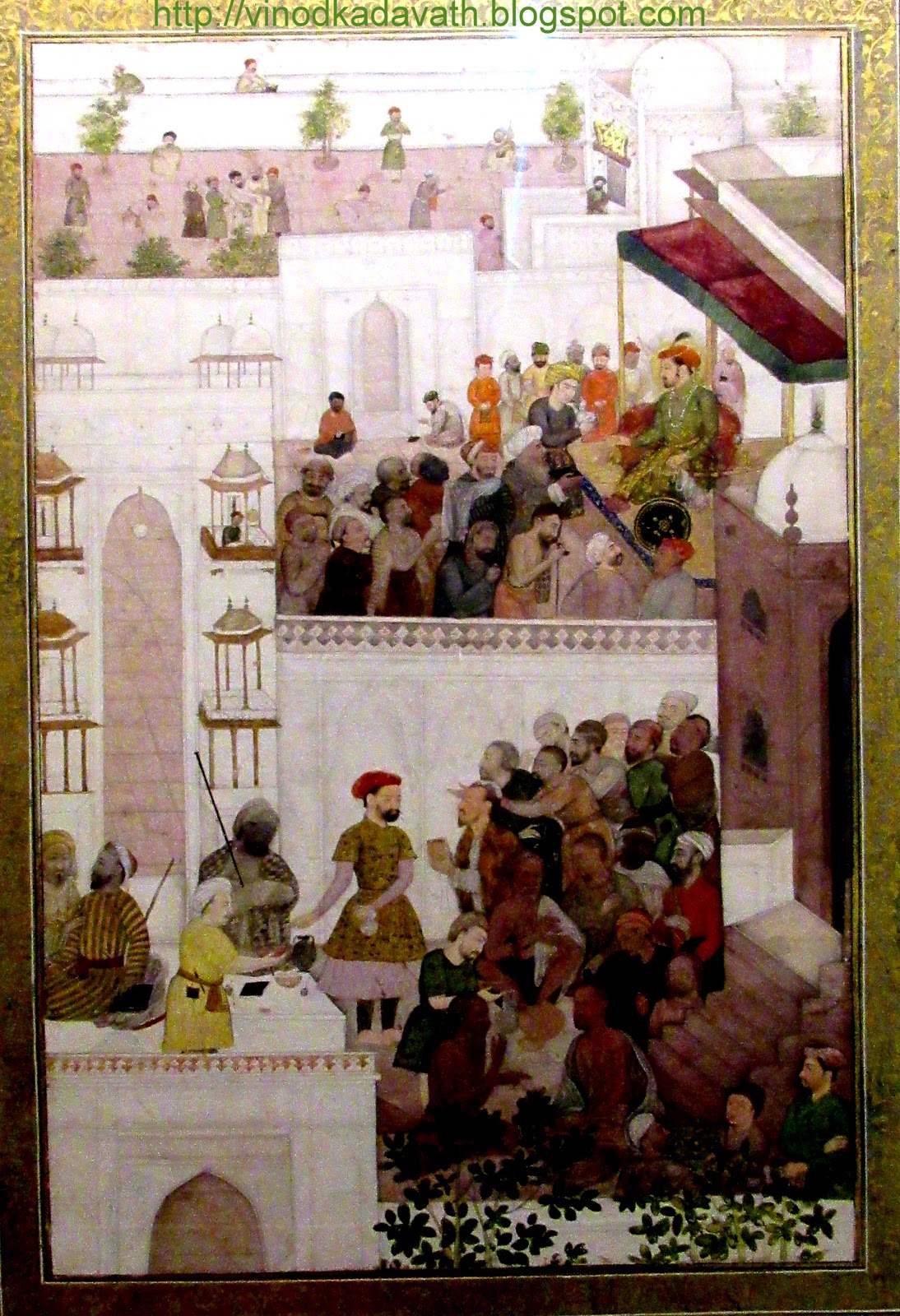 |
| Mughal Style paintings |
Krishna Gallery
 |
| Cheera Harana |
Sir Ratan Tata Gallery
Tata Gallery has a good collection of European Paintings. The Tata collection comprises two major sections, the European and the Far Eastern. Sir Edwin Ward, James Jebus Shannon, Jorge Romney, Thomas Gainsborough and Robert Hillingford are just some of the artists whose works are on show.
Tata Gallery has a good collection of European Paintings. The Tata collection comprises two major sections, the European and the Far Eastern. Sir Edwin Ward, James Jebus Shannon, Jorge Romney, Thomas Gainsborough and Robert Hillingford are just some of the artists whose works are on show.
Lady Ratan Tata donated the furniture for the galleries.

Sir Dorab Tata Gallery

Indian Textile and Consume Gallery
This climate-controlled room showcases glimpses of the textile traditions of India. The Otni & Balni at the entrance reminds us of an era when hand picked cotton and spinning wheels were used to spin yarn. The gallery has a good collection of Religious items and Royal Costumes.
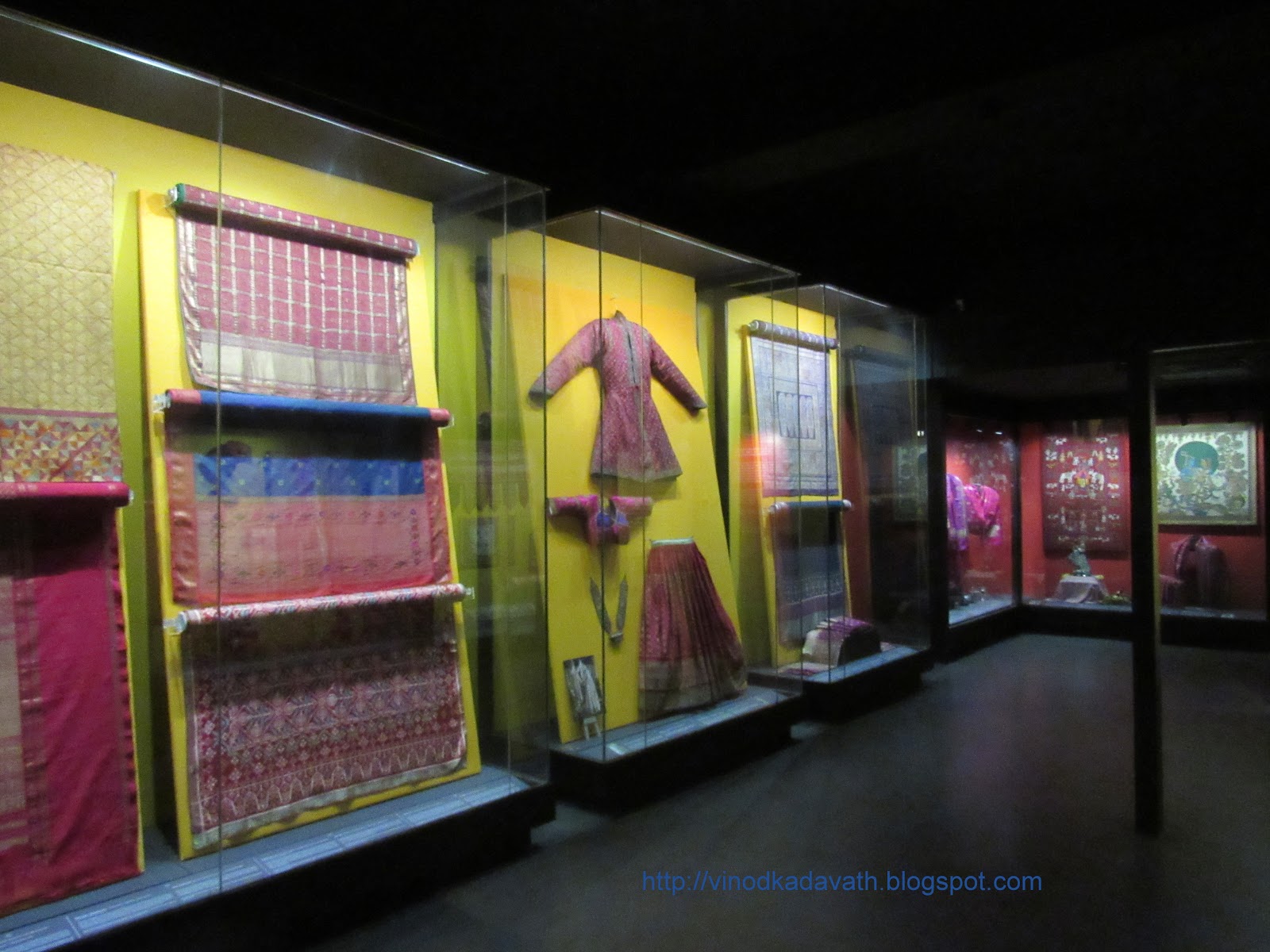
The gallery has a large collection of shawls from Kashmir, ikat cloths from Gujarat and Sarees from Thanjavur and Kanchipuram.
Arms and Armour Gallery
This gallery exhibits a large collection of Indian weapons through the ages.
You can admire a collection of swords and armour belonging to Emperor Akbar, Shahjahan and Aurangzeb.
Chinese and Japanese Art Gallery
The Chinese and Japanese Gallery occupies part of the top floor. Many snuff bottles from China are on display in a large glass case.

Natural History Section
Natural history section is situated on the right of the ground floor. This section has a large selection of stuffed animals, including fish, snakes and birds.
Natural history section is situated on the right of the ground floor. This section has a large selection of stuffed animals, including fish, snakes and birds.

The entry fees to the museum is Rs.60 and Rs. 20 for permission to take photographs.