Sunday, September 09, 2018

Varikkasseri Mana


After more than a month of busy schedule, I happened to travel through Thrissur and Palakkad districts in the Indian State of Kerala. The recent floods has caused untold  damages to roads and houses. It was saddening to see the places affected by landslides which took the lives and livelihood of many people.  On my way to Ottapalam from Shoranur, I stopped at Varikkasseri Mana. It is situated just one kilometer from Manisseri. Visitor car parking inside the compound is not allowed. I parked my car on the road side. Entry ticket is Rs.20. The entry is actually through the back side of the building.

I was walking towards the house which I had seen only in Malayalam cinema till date.  'Theertham' was the first Malayalam film shooted here. But director IV Sasi's  Malayalam film 'Devasuram' made this house an important location in Malayalam cinema.

Actually known as Varikkumanchery Mana, it was constructed 112 years back by Varikkasseri Ravi Namboothirippad. The family owed its allegiance to the Zamorin of Calicut.  The yellow painted structure including Poomukham is constructed after 30 years. The design of Poomukham is different with long pillars. One member of the family -  Krishnan Namboothiripad also known as 'Shilpy Thampooran'   designed this building.  He studied fine arts in Madras and his influence is reflected in the design of Poomukham.

And I  sat on the steps of the  'Poomukham' trying to imagine the unforgettable scene of Devasuram - Mangalasseri Neelakandan sitting in a chair and the dance performance of Bhanumathy. I made a conscious decision to wear a blue shirt and 'Mundu' and I wanted to be photographed like Neelakandan.

'Poomukham', Varikkasseri Mana

As you wander around the Verandha (hallways) and various halls, you will step into artworks on every corner. The  main door is facing western side and the art work on the door is awesome. The Verandha is elevated differently. You can watch wooden roofing and pillars with art work. Red hand cut bricks are used on the boundary wall.


The main door is open to Padijattini - the place for entertainment. It is spacious and the roof is designed in solid wood with art work. The main attraction of this house is the main Nalukettu.

'Nalukettu',  Varikkasseri Mana

There is a wooden stair to reach the  first floor. There are two other stairs like this. There is a big hall and a bed room next to the hall on the first floor. Roof are made up of wood and all rooms have enough ventillation. You can watch many exit doors and most of the doors are not opened for public . You can have the view of 'Nadumuttam' from all rooms . I spent hours just wandering around, enjoying the wooden work on the roof  and view from rooms.  Rooms are cool enough and this is how ancient people lived here. This is really a palace.


And I came out of the main building and walked towards the building left to the main building. This building has two pathayappura and the main pathayapura is constructed in Victorian style. Earlier there was a bridge connecting this building with the main building and removed it later. You will get a good view from the balcony. The Malayalam film 'Thooval Kottaram'   was also shot in this building. You can also see this building in the film 'Devasuram'.

'Pathayappura', Varikkasseri Mana

It also has a Sreekrishna temple, a marvelous large pond with kulappura (a building at the pond-entrance). Entry to the temple is not allowed to visitors. Some scenes  in the Malayalam films 'Aaram Thampuran' and 'Drona'  shot here.


Total 170 films shot here in all languages. Visiting time is restricted between 9.30 am to 3 pm. Do not miss this place if you are traveling between Shoranur and Ottapalam.

Sunday, August 05, 2018

Poolakund Water Falls, Chelakkara


For the last two months I could not make any travel.  Some unprecedented events in my life made it hard to just pick up and take off. After arriving at Chelakkara, a village in Thrissur district, in the Indian state of Kerala, for two weeks,  I had been looking for an opportunity to visit some places nearby. At last,  one of my relatives took me to Poolakund waterfalls, in his motorbike. 

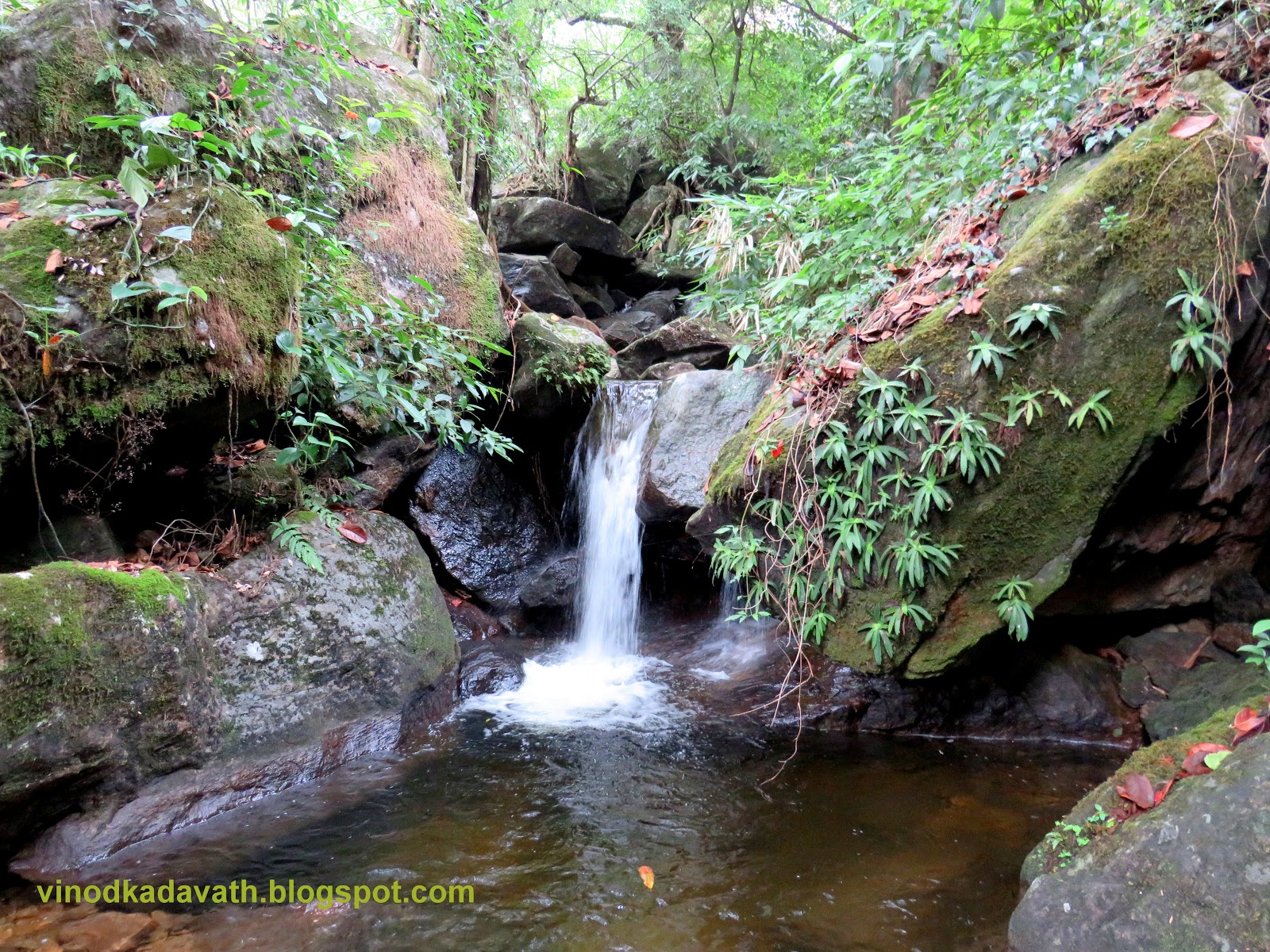
Poolakund falls is around 3 kms from Pangarapilly Junction, on the way to Elanad. The road deviated to Poolachodu from the main road. The road was muddy when you are close to Poolachodu and was no less than a foot-path. From the road, walk along the water stream into woods. There was nothing spectacular about the place. When you  walk,  stop and enjoy the sound of nature. The path is generally easy to walk and the walk is pleasant as you stroll through the forest.

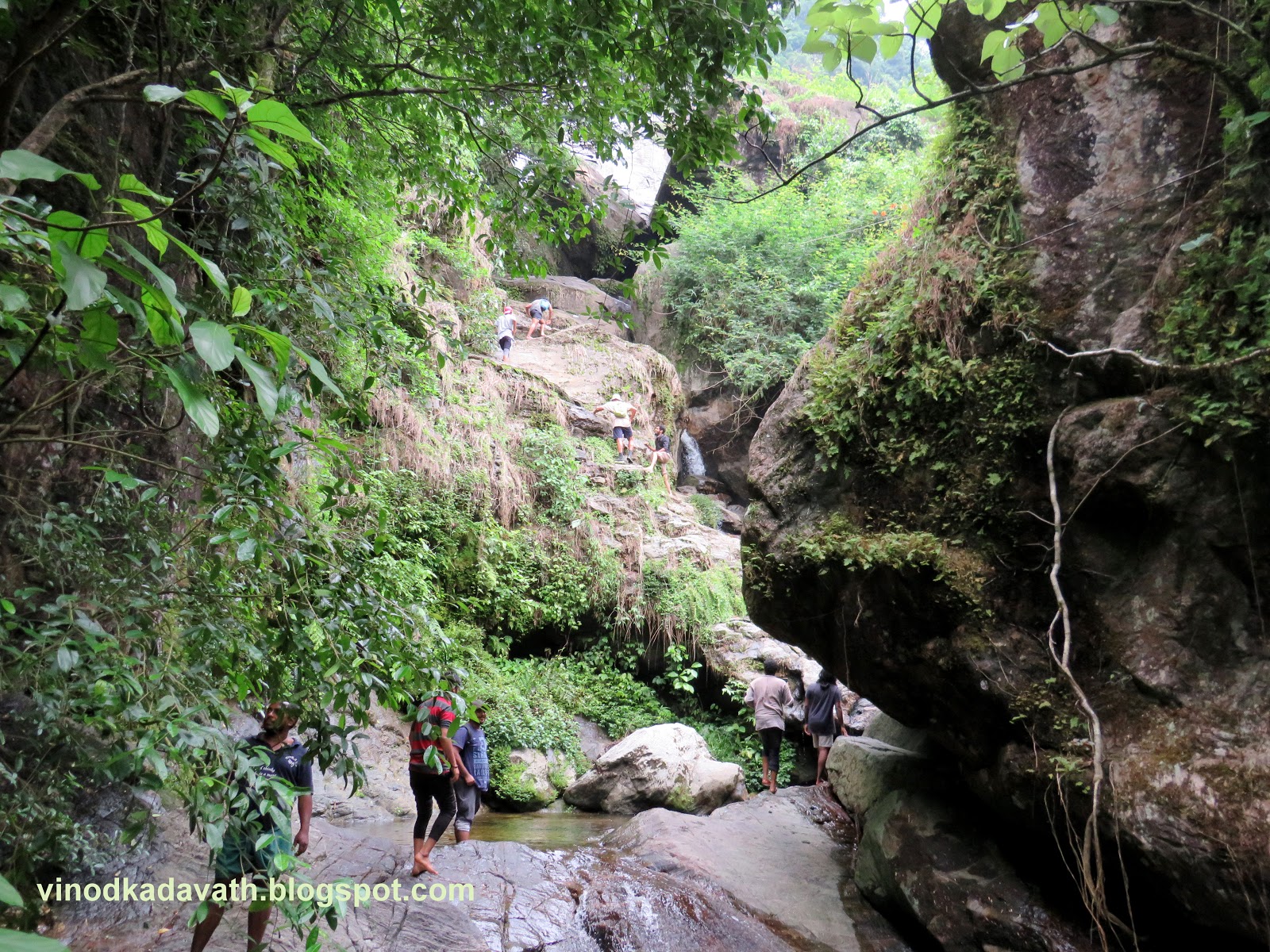
The day was cool and sombre. Shortly we could hear the sound of the falls and  huge rocks covered  the waterfalls. The first few steps beneath the falls are natural stone steps. From here you can view the falls perfectly. From there you gain a lovely view, looking upstream, of the cascading falls. The walk at the foot of the falls provides several superb vantage points for sight seeing.


Better to avoid walk on the rocks beneath the falls. Enjoy the beauty all around and listen to the gurgle of the water from the falls. It is perfect for picnics and observing nature. Return the way you came after viewing these cascading falls.

Sunday, May 20, 2018

The Unexplored Caves of Mankulam


Monsoon is the best possible time for trekking. But there is another reason for selecting the less talked about Mankulam. The caves have a lot of interesting stories which gives us lot of curiosity. One such interesting unexplored caves are found at Mankulam. Moreover the climate is turning more pleasurable by the passing days and forest streams are now gurgling with crystal clear water.

Mankulam is just 126 kms from Kochi, in the Indian state of Kerala. Our route was :
Kochi -Aluva - Adimali - Kallar - Mankulam

We were informed that our base camp was at Chinnar Chappath ( also named as  Chinnar Kuthu ) which is just one km before reaching Mankulam town. We parked our car near one of the road side house and started climbing through coffee plantations towards our base camp. A huge waterfall amidst the forest and plantations welcomed us. 

We were almost beneath the waterfalls. There was a huge rock structure which was fenced and a metal ladder was placed to reach the top. And we walked little ahead and saw our base camp. It was constructed at the back side of the rock and the rock itself is used as wall of the building.  It had all basic amnesties like two bath attached rooms, kitchen and verandah.

After having lunch, we were ready to spend a good, long part of the day in exploring the forest and the caves  and soaking in the best of what the season has to offer.

Cave Exploration

We set off into the forest.  There are ten hidden caves in this area and there is no legend associated with these caves. This is a naturally formed cave system. These caves are set amidst dense evergreen forests of the Western Ghats and cascading waterfalls. There were two caves near to our base camp.  After crossing two caves,  you'll have to cross a small stream coming from cascading waterfalls. The water is chilling but at the same time refreshing.


After a few minutes into the trek, we realized we were lost as there was  no trail to be found. The forest cover was thicker than ever.


We were totally clueless about the route even with our guide along. We could not find the trail leading to the caves.  And we reached nowhere.

The only way was to climb the rock. We started climbing the difficult path. The path became more dangerous and alarming and it involved a bit of elementary rock climbing. The trail was challenging, steep and an excellent place to test your endurance.  However the experience was  thrilling as the trail went  through dense forest cover and stream crossings before reaching the hidden caves.


Since it was monsoon season, the waterfall gushed down with force  inside the cave and all of this just made for one enthralling experience.


Descending from the cave was a little tricky.  You have to go down through a narrow hole, only one person can crawl at a time. Walking and bending and even crawling at certain places through the pathways, tires you out.  But this is a great experience if you are looking for some adventure and thrill.

One we reached the base camp, we decided to stroll around the Mankulam village. Mankulam is a very scenic small village. There are some resorts for accommodation. Reached back to the base camp and had a bath in the pool under the waterfalls. It was enough for me to wiped out the day's tiredness.

After a heavy dinner and chit chatting, it was time for camp-fire and tent setting. Few of the team members slept in the base camp and others preferred tent stay above the rock structure. This area can accommodate around 10 tents at a time. I slept in my tent in the verandah. The reason was to keep others from my thundering snoring. I retired to my tent. The sound of the waterfall that is constant music to the ears  and cool breeze that started blowing, lulled me into deep sleep.

Day 2

We woke up at the break of the dawn. The peaceful forest trail starts from the base camp  and winds up along gently towards the plateau. First few kilometers takes you through the plantations. As you ascend, the forest open up to numerous vistas. Continuous chirping of birds and the sound of the wind echoing in the forest is constant music to the ears. Further the trail goes through Shola forest, crossing several small streams.

From the top you will get a picture-perfect backdrop of Mankulam village. We rested here for some time and every one was busy taking photos and selfies and they tried to get as close to the edge as much as possible.


Further was a series of streams with water so crystal clear, cool and pure for drink. I breathed deeply and sniffed Ayurvedic herbs. I filled my bottle from a  natural spring.


At last, we left the jungle and returned to the base camp.

Sunday, April 29, 2018

BhoothathanKettu Dam and Reserve Forest

Periyar Barrage, Bhoothathankettu 

Its name, as it turns out, is  the most dramatic thing about Bhoothathankettu.  The dense forest cover of this place, shrouded in myth and reality, starts appearing as soon as you cross the Periyar Barrage in  the new Bhoothathankettu Dam. The dam is a vantage point from where you can spot the turbulent water rushing from the dam towards the Old Bhoothathankettu. It is situated 50 km away from Kochi,  in the Indian state of Kerala.

Explore : Old  Bhoothathankettu  & Reserve Forest

If you like to walk, trekking to old Bhoothathankettu  is a great experience crossing small springs by the side of the Periyar river.  The walk starts from the end of the Periyar Barrage. This is also the entrance of the Edamalayar hydroelectric project. The walk is conducted by Bhoothathankettu ecotourism. This place is under Malayattoor Forest division, Thundathil Range. Since this is a guided walk, you will get an opportunity to know the forest and nature.

Entry time is restricted from 9 am to 4 pm. Entry ticket is Rs. 20 for adults, Rs.10 for Children and Rs.50 for Foreigners. Only two restaurants are available in this place and you will get tea, snacks and ice creams. There are also vendors selling ice cream, peanuts and  chips. During the walk, you can see a cave tree, a huge cheeni tree and other forest trees.

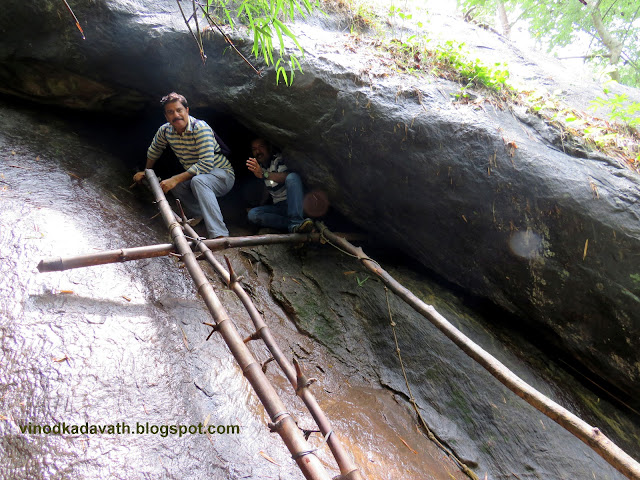
But the most interesting attraction is a big cave inside the forest. Since this is a rainy season, the path to the cave is slippery and a temporary bamboo ladder is placed to help visitors enter into the cave.


Even though the entry is short, one can stand straight inside the cave. This can accommodate hundred people at a time.

The debris of huge stone are visible here which were used to identify the direction.

Once you reach old Bhoothathankettu, you will be surprised by the majestic beauty of the Periyar flowing through a big gap between the rocks. If one more rock was there, the flow could have been arrested completely.

Old BhoothathanKettu

There is an interesting mythological story about this place.  Demons wanted to destroy the Thrikkariyoor Temple of Lord Shiva by building a dam, and started rolling huge rocks towards the riverbed in the thick of the night. The God, however, decided to fool the demons by creating an illusion of dawn. The demons fearing the arrival of light fled the place . He saw the boulders which the demons were supposed to have rolled onto the riverbed, the Old Bhothathankettu . The Periyar flows on through the narrow space which the demons did not quite manage to dam up .

The reality is that the gigantic rocks rolled down from the mountains during the landslides caused by floods of the 4th century and become entrenched in the Old Bhoothathankettu.   In 1790 Tipu with his army camped on the banks of the  Periyar river at Aluva. To prevent his evasion,  a small group led by Vaikom Padmanabha Pillai and Kunjai Kutty Pillai went upstream and managed to break the walls of a dam at Bhoothathankettu causing heavy flash floods downstream Periyar river.

Those who visit the area should not venture into the river for swimming since the under currents are very strong and the water deep in some areas.

Birdwatchers will be thrilled by some of the species found here. This is a kind of place you would go to listen to the nature. You can occasionally hear the leaves hustle with the wind or the sound of the birds. You can watch a wonderfully quaint hut set into the breathtaking countryside of old dam.

The trek takes one hour and is suitable for anyone.

Boating

Boating for 10 km is also offered at Bhoothathankettu dam. During the ride, one can witness the Thattekad Bird Sanctuary too. Entry fee is Rs. 150 for one person for one hour.  Entry time is restricted from 8 am to 5 pm. The area around the boating facility is landscaped with tree houses, a children's play area and a restaurant.

Nestled amidst the lap of nature with  thick forest on one side and cultivated coconut and rubber trees on the other side, it is a sight to behold. We were in the constant lookout for elephants, deer, sambar, and wild dogs but had no luck.


You can also witness Chelamala, the remnants of summer palace of Chola kings during the boat journey. We saw few resorts by the side of the reservoir. 

A trip to this picturesque place is the perfect way to soothe the Big City nerves.


Sunday, March 25, 2018

Kerala's Thattekad Bird Sanctuary, a Birdwatcher’s Paradise


Thattekad is the first bird sanctuary in Kerala, India. In 1933, during  his Travancore Cochin Ornithological survey in Thettekad forest, Dr.Salim Ali  recognised the avifaunal richness of the area.  As recommended by Dr.Salim Ali, in 1983, an area of 25.16 Sq.km. covering forest, wetlands and rivers at Thattekad was notified as Kerala's first Tropical community bird sanctuary. It is located just 12 ms from Kothamangalam in Ernakulam district of Kerala. Nine sq.km is for habitation and rest of 16.16 sq.km is available for sanctuary and is very rich in flora and fauna. 

Explore

There are many ways to explore Thattekad. Here visitors are allowed to walk through the jungle. Visitors can also opt for a boat trip in the reservoir offering unusual point of view of the forest. Approximately twelve thousand species of birds are spotted in the world of which  1200 species of birds are found in India and 593 species of birds have been spotted in  Kerala. Thattekad bird sanctuary alone has 322  kinds of birds and forty percent of them are long distance migrant birds - approx 160 - come from outside. They  come from Siberia , Canada etc  by crossing the  Atlantic. First they land in China and then cross the high Himalayas before coming to south India. Last year they found a group of birds from Thekkady - Bar-headed goos - it is found in thousands in Himachal . Here there are only 200-300.  There have also been sightings of  internal migrants from Kashmir, high altitude places like Munnar etc.

The area is a part of the western Ghats.  Anamudi is in the eastern side of Thettekad bird sanctuary and  is the second  highest hill with  8863 ft height. Distance from Thattekad to Anamudi crest is about 22 kms only. The slope from Anamudi and climate influence caused multiple flaura . Habitat diversity and topographical position of the area is the main reason to make it bird rich.  Naturally migrant birds fly from west to east. Due to high altitude they are forced to land here where sufficient foods, breeding facility etc is available.

BUTTEFLY PARK MUSEUM

Butterfly Garden is one of the attraction for the visitors in the santuary. The Garden  is studded with different flowers and butterflies.


Besides these winged beauties, Thettekad has all major mammals  as well. It is home to one Tigress, four leopards with one cub etc. 

It is also home to 28 species of frogs. In 2008, a new species of frog was spotted with its nose like tortoise and body like frog. A sliding frog is also visible. This place is home to reptiles too.  It is common to spot king cobra. Different kinds of chameleons are also available .

The joys of walking through this untamed landscape include spotting orchids. Twenty seven kind of orchids are available,  most of them are wild orchids.

The area is rich in flora and fauna. Each forest has its typical plants. This kind of combination is the first in the world. There are more than 1000 plants. 60% are of medicinal value.  This is truly an  Earth's  green pharmacy. 


The sanctuary is famous for fish diversity. 55 kind of fish found in Thattekad. The sanctuary is bordered by the river Periyar on the southwestern side and its tributary Pooyamkutty river on the northern side. 

A minimum of 1-2 days camping is  required to understand the entire area.

Boating in Periyar

WHAT YOU CAN DO IN THATTEKAD
Jungle Night camping
Salim Ali Nature Trail
Boating in Periyar

Sunday, February 25, 2018

Walking Through the By-lanes of History in Fort Kochi


Fort Kochi is known for its beaches, Chinese fishing nets, historical buildings and cafes that serve European food. But also dotting the cultural remnants of  the Portuguese, the Dutch and the English.

The first European township in India was built as a fort city by the Portuguese. Before the Dutch destroyed Fort Immanuel in Fort Kochi, it had seven bastions. Even though you can no longer actually see the Fort after which the town is now named, but you can watch the barely existing fort walls and its old bastions.

A guided walk on a  Sunday morning is the best time to uncover the city's history. The walk started from Vasco da Gama Square. Pavement traders on both sides of the sidewalk on Vasco Square filled with Green vegitables, Tender stall, Vintage shop and Ice cream. You can watch Chinese fishing nets and  fresh fish stalls in this place. There are a lot of vendors on both sides of the park selling mortar, eyelashes and bracelets.

TOWER HOUSE

Tower house

The walk goes through Jawahar Park. Since the British period, this area has been used by the public to spend their evenings. The British administration erected a tower like machine here to measure the power of the wind

Once you cross the park, you can see the old harbor house. This old bungalow, built in 1808 belonged to Carrit Moran & Co., renowned tea brokers. Now they have converted the bungalow into a hotel.

Koder house is next to the old harbor house. This building was constructed in 1808 by a Jewish patriarch, Samuel Koder of the Cochin Electric Company. Now this three -storeyed building has been converted into a heritage boutique hotel.

FORT WALLS

existing fort walls
Soon you will reach K B Jacob Road where you can see the remains of the fort walls. This wall is considered to be the boundary of the Fort.

SANTA CRUZ BASILICA

Santa Cruz Basilica
Santa Cruz Basilica, the original Catholic Church in Fort Kochi, was built by the Portuguese in 1505 and named as a cathedral in 1558. The current structure dates to 1905 and was made a basilica by Pope John Paul II in 1984.

VIHARA


Behind the Santa Cruz Basilica, you can see a structure which has been considered as a Vihara and now it is kept as a monument.

The walk goes through K L Bernard Master road where you can find fort walls, now part of private property.

BISHOP HOUSE

Indo-Portuguese museum in Fort Kochi is located in the compound of Bishop House. It showcases Portuguese influence in Kochi and is famous for it's collections from various churches. It is considered as one of the seven bastions of the Fort.

THAKUR HOUSE

This magnificent bungalow was built on the sea side, facing Gelderland Bastion, one of the seven bastions of the Fort. Thakur House was earlier known as Kunal or Hill Bungalow.

THE DUTCH CEMETERY

The Dutch Cemetery
The Dutch Cemetery is now managed by the Church of South India and is the testimony of the European community at Fort Kochi. This was constructed in 1724.

FORT KOCHI BEACH


Fort Kochi Beach is one of the favourite tourist destinations in Kochi. You can enjoy the breathtaking view of the Arabian sea or take a stroll on the walk-ways. The walk-way extends till the famous Fort Kochi fish market. It is considered that the remnants of the forts are buried under the layers of sand of the Fort Kochi beach.

ST FRANCIS CHURCH

St Francis Church
St. Francis Church is believed to be the oldest church built by Europeans in India. This was the burial spot of Vasco da Gama, who died in Cochin during his third visit. Later his remains were taken back to Portugal.

PARADE GROUND

Parade Ground

Surrounded by impressive century old trees and old buildings, the four acres of Parade Ground was used by the Portuguese, the Dutch and the British to conduct military drills and parades. Today it is the largest open space in Fort Cochin and serves as a public sports ground.

COCHIN CLUB

Cochin Club

Located in Fort Kochi near Parade ground, this was a British club till Indian Independence. Presently, it is open to Club members.

VOC GATE

VOC logo on VOC Gate
Facing the Parade ground is a large gate with the initials VOC. The monogram, which is dated 1740, represents the once mighty Dutch East India Company, which had its offices here for almost 150 years.

VASCO HOUSE

Vasco House
Vasco House is believed to have been the residence of  Vasco Da Gama until his death in 1524. The original high wooden ceilings, old stone-staircase, and a series of typical European glass-paned windows have been maintained to this day.

BASTION BUNGALOW

Bastion Bungalow
Originally one of the seven bastions of the 17th-century Fort Immanuel built by the Portuguese, this bungalow was built by the Dutch using one wall of the original fort. In keeping with the architecture of the region, it has a tiled roof, and long wooden verandas, and today, functions as a heritage museum.

Sunday, January 21, 2018

Padmanabhapuram Palace & Museum of Antiquities


Built in the 16th century, Padmanabhapuram Palace seems to have resisted the sweeping march of time. On the Thuckalay-Kulasekharam route, turn from Thuckalay to the Palace, which is just one km from Thuckalay. For many, the palace is a pitstop on the way to Kanyakumari from Thiruvananthapuram. The palace has a handful of families who have lived here for generations. 

I was walking towards the biggest wooden palace in Asia. The Palace is nestled by the bustle of shops and hotels. A walk after crossing the main entrance takes you back to the reign of royal kings of Travancore. The first sight of the palace was impressive. Once you enter the large lawn, you can watch a 300 year old clock which still keeps time.


Our first stop inside is 'Poomukham', where the king entertained special guests. The entrance of this building is shaped as a triangle and it showcases the indigeneous architechtural style of Kerala.

Poomukham

The most striking feature of the building is the wooden ceiling, where ninety flowers have been carved and each of them is unique.


Another attractions in the 'Poomukham' are Kuthira Vilakku ( hanging brass lamp with a knight on horse-back), a Chinese chair presented to the King by  a Chinese merchant and the 'Onavillu' presented to the King as tribute by landlords and cheiftains of different clans during the Onam festival.

Kuthira Vilakku
First floor of the building is 'Mantrasala' ( King's Council chamber), which is decorated by wooden window grills and beautiful craft work of wooden ceiling. This is the most impressive part of the palace.
Mantrasala ( King's Council chamber)

The floors throughout the palace are in shades of bone white, rich earthy brown and black. The ingredients of the floor include egg shells, lime, tender coconut water, coconut oil etc. The coloring added by using,coal from burnt coconut shells, for black, red hibiscus and henna for brown and egg shell and lime for ivory.

Next to the Mantrasala is Oottupura ( Dining Hall ), a two-storeyed building, which can accommodate over 1000 people at a time in each floor.

Oottupura ( Dining Hall )

At the farther end of the hall is the exit. Next our stop was at  'Thai Kottaram' also known as mother palace. This Nalukettu style building was built during the reign of Ravi Varma Kulasekhara Perumal. The ceilings were carved out of wood and were a treat to the eyes.

Next up is the 'EKANTHAMANDAPAM'. The main attraction in this building  is 'Kannithoonu'  a ceiling supporting pillar built of jack fruit tree.


And then there was the majestic King size bed- a wooden cot made up of 64 different pieces of wood which are of medicinal quality. The Queen's dressing room nearby had  another cot.


Next up is 'Ambari Mukhappu' which was was built for the kings to view chariot races (temple car's race) during festivals and to appear before the public on special occassions.


Next up is Navarathri Mandapam.  Various cultural programes were conducted  in this place during the Navarathri festival. The dance floor was polished to mirror-dance perfection so much that it is known as 'Kannadithara' or mirror floor. Separate rooms with 'Kilivathil' ( small wooden windows built in the wall) have been made for the king to view the programmes without being seen by the common public.

Navarathri Mandapam

After hours of Palace hoping, we came out of the  main Palace compound.  Then we walked to the Thekke Kottaram Heritage Museum which is adjacent to the Padmanabhapuram Palace. The Thekke Kottaram has three small buildings carved in traditional architecture. One of the buildings has its balcony opening to a pond below. One building houses the heritage museum and the third one used to be a ‘Thekkini’ or place of worship. When you enter the heritage museum, you can see age-old domestic appliances, musical instruments and other artifacts..

Padmanabhapuram Palace showcases centuries-old tradition in timeless glory.